Robotic Joint Replacement in Bangalore: Complete Guide to Cost, Recovery, and Choosing the Right Surgeon
Joint replacement surgery has come a long way from standard manual techniques, and robotic joint replacement is now widely regarded as one of the most precise ways to treat advanced knee and hip arthritis. If you’re exploring options for a worn-out joint and want to understand how robotic-assisted surgery differs from conventional replacement, what it costs in Bangalore, and how to choose the right surgeon, this guide covers everything you need.
Whether you’re based in Rajajinagar, Jayanagar, Bannerghatta, or elsewhere in Bangalore, robotic joint replacement is increasingly accessible — and understanding how it works can help you make a more informed decision about your own treatment.
What Is Robotic Joint Replacement?
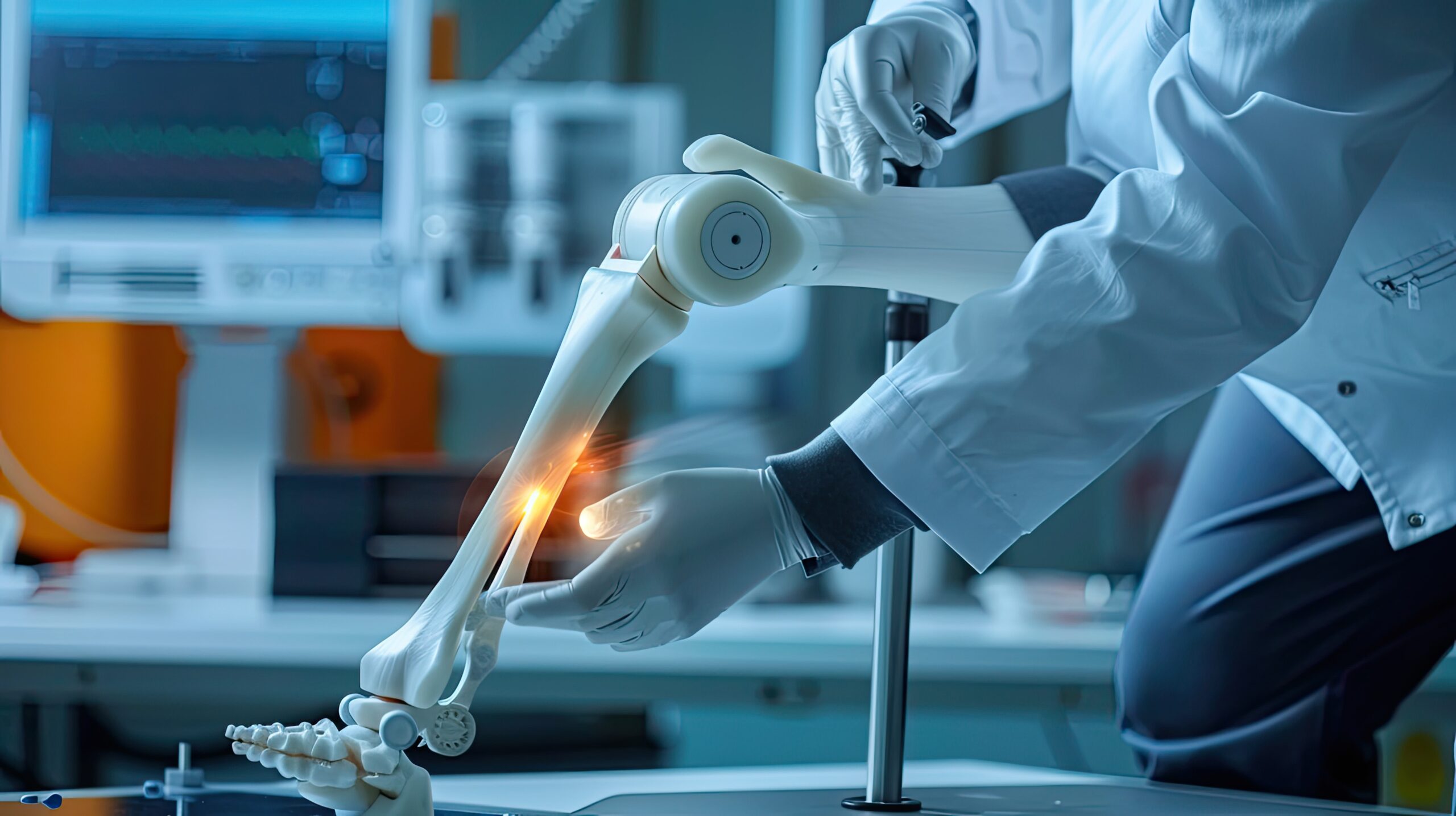
Robotic joint replacement uses computer-assisted technology to help the surgeon plan and execute the procedure with a level of precision that’s difficult to achieve with manual instrumentation alone. It’s important to clarify one common misconception: the robot doesn’t perform the surgery independently — the surgeon remains in complete control throughout, using the robotic system as an advanced guidance tool.
Here’s how it generally works:
- Pre-surgical planning — a CT scan or specialised imaging of your joint is used to build a 3D model, allowing the surgeon to plan implant size, position, and alignment before entering the operating room
- Intra-operative precision — during surgery, the robotic arm helps guide bone cuts and implant placement according to the pre-planned model, with real-time feedback and adjustments
- Soft tissue balancing — the system helps assess and balance the surrounding ligaments and soft tissue, which is critical for how naturally the joint moves after surgery
Robotic technology is most commonly used for knee replacement (both total and partial) and hip replacement, though the specific systems and capabilities vary by hospital.
Robotic vs. Conventional Joint Replacement: What’s the Difference?
Patients often ask whether robotic surgery is genuinely better than the conventional approach. Here’s an honest look at the differences:
- Precision — robotic systems allow for more accurate bone cuts and implant alignment compared to manual jigs and instruments, based on your specific joint anatomy
- Personalisation — the pre-surgical 3D planning allows the surgeon to tailor implant positioning to your unique joint shape rather than relying solely on standard anatomical landmarks
- Soft tissue preservation — robotic-assisted techniques can help minimise unnecessary trauma to surrounding tissue during bone preparation
- Potentially faster early recovery — some patients experience less post-operative pain and a quicker return to mobility, though outcomes still depend heavily on the individual patient and surgeon’s overall skill
- Surgeon expertise still matters most — the robotic system is a tool that enhances precision, but the surgeon’s experience, judgment, and technique remain the most important factor in a successful outcome
Robotic assistance doesn’t replace surgical skill — it complements it, giving an experienced joint replacement surgeon an additional layer of accuracy.
Who Is a Good Candidate for Robotic Joint Replacement?
Robotic joint replacement is generally suitable for patients who need:
- Total or partial knee replacement due to advanced osteoarthritis
- Total hip replacement due to severe hip joint damage or arthritis
- Complex joint deformities where precise alignment is especially important
- Revision joint replacement, in select cases, where previous implants need careful, precise removal and replacement
Your surgeon will evaluate your X-rays, joint condition, bone quality, and overall health to determine whether a robotic-assisted approach is the right fit for your specific case.
How Robotic Joint Replacement Surgery Works
1. Pre-Surgical Imaging and Planning
A CT scan of the affected joint is taken and used to build a personalised 3D surgical plan, mapping out implant size and positioning specific to your anatomy.
2. Anaesthesia
The procedure is performed under general or regional anaesthesia, similar to conventional joint replacement.
3. Guided Bone Preparation
The surgeon uses the robotic arm to prepare the bone surfaces according to the pre-operative plan, with the system providing real-time guidance and boundaries to protect surrounding healthy tissue.
4. Implant Placement
The prosthetic components are placed with the precision guided by the robotic system, and the surgeon verifies joint alignment, stability, and range of motion before closing.
5. Closure and Early Mobilisation
Many robotic joint replacement patients begin gentle mobilisation and physiotherapy within a day of surgery, supporting a smoother early recovery.
Dr. Chethan Nagaraj at Orthocare is an expert in computer-navigated joint replacement surgeries, applying advanced precision techniques across his knee, hip, and shoulder replacement practice.
Robotic Joint Replacement Cost in Bangalore
Robotic joint replacement typically costs more than conventional joint replacement, given the advanced technology, imaging, and specialised planning involved. Cost depends on several factors:
|
Category |
Typical Range |
|
Joint involved (knee vs. hip; partial vs. total) |
Cost varies based on complexity and implant type |
|
Robotic system and technology fee |
Adds to overall cost compared to conventional replacement |
|
Hospital category and room type |
General ward vs. private room affects overall package |
|
Length of hospital stay |
Typically 3–5 days depending on recovery |
|
Post-operative physiotherapy |
Often bundled into treatment packages |
|
Pre-surgical imaging (CT scan, blood work) |
Usually billed during the consultation and workup phase |
Given the technology involved, robotic joint replacement cost estimates should always be obtained directly from your surgeon’s clinic after a full evaluation of your joint condition and imaging. Most major health insurance policies in India cover robotic joint replacement, though it’s worth confirming coverage specifics and any technology-related charges with your insurer beforehand.
Robotic Joint Replacement Recovery Timeline
Recovery follows a broadly similar path to conventional joint replacement, though many patients find the early stages somewhat smoother due to the precision of the procedure.
Week 1–2: Hospital discharge typically occurs within a few days, with early walking (often with a walker) and pain management as top priorities.
Week 3–6: Progressive physiotherapy focused on strength, range of motion, and reducing dependence on walking aids.
Month 2–3: Most patients walk independently and resume many daily activities, with continued strengthening exercises.
Month 3–6: Further improvement in strength, stamina, and range of motion, with most patients returning to normal daily routines and low-impact activities.
Month 6 onward: Continued long-term improvement, with many patients reporting significant quality-of-life gains compared to their pre-surgery joint condition.
As with any joint replacement, consistent physiotherapy and following your surgeon’s activity guidelines play a major role in how quickly and completely you recover.
Why Location Matters When Choosing a Robotic Joint Replacement Surgeon in Bangalore
Joint replacement recovery involves multiple follow-up visits and physiotherapy sessions over several weeks to months. Choosing a surgeon and clinic close to home makes a real difference in how consistently you can attend these sessions, which directly affects your final range of motion and strength.
Orthocare offers robotic and computer-navigated joint replacement consultation and surgery across two convenient Bangalore locations, serving patients in Rajajinagar, Jayanagar, Bannerghatta, and surrounding areas:
- Orthocare Center, Rajajinagar — 241/24, 53rd Cross, 10th Main, Rajajinagar 4th Block, Opposite Ram Mandir, Bangalore 560010
- Sagar Hospital, Jayanagar/Tilaknagar/Bannerghatta — #44/55, 30th Cross, Bannerghatta approach road, Jayanagar 4th T Block, Tilaknagar, Bangalore 560041
Patients searching for robotic knee replacement in Rajajinagar or robotic hip replacement near Jayanagar and Bannerghatta can access consultation, surgery, and follow-up physiotherapy without long commutes across Bangalore.
Why Choose Dr. Chethan Nagaraj for Robotic Joint Replacement in Bangalore
Choosing the right robotic joint replacement surgeon in Bangalore means finding someone with genuine expertise in both the technology and the underlying surgical fundamentals. Dr. Chethan Nagaraj offers:
- 15+ years of dedicated orthopedic and joint replacement experience
- MBBS from Mysore Medical College and a Masters in Orthopaedics from Madras Medical College, Chennai
- Clinical experience at AIIMS and the Jai Prakash Narayan Apex Trauma Center, New Delhi
- International fellowship training from Australia, New Zealand, and Japan
- Specific expertise as a computer-navigated and robotic joint replacement specialist, applying this precision across knee, hip, and shoulder procedures
- A patient-first communication style — patients consistently mention how clearly he explains the technology, procedure, and recovery expectations, which helps set realistic expectations before surgery
If you’re researching the best robotic joint replacement surgeon in Bangalore, it’s worth booking a consultation to discuss your joint condition, imaging, and whether a robotic-assisted approach is the right fit for your case.
Risks and Complications to Be Aware Of
Robotic joint replacement carries similar overall risks to conventional joint replacement, with the added benefit of enhanced precision:
- Infection — uncommon, but proper wound care and hospital protocols significantly reduce risk
- Blood clots (DVT) — a small risk after any lower-limb surgery, managed with early mobilisation and, where needed, blood thinners
- Implant loosening over time — reduced risk with more precise implant alignment, though periodic follow-up remains important
- Stiffness — usually minimised through early, consistent physiotherapy
- Technology-related limitations — in rare cases, intra-operative factors may require the surgeon to switch to a conventional technique; an experienced surgical team is well-prepared to manage this smoothly
Choosing an experienced robotic joint replacement surgeon in Bangalore and following your physiotherapy protocol closely significantly reduces the likelihood of complications and supports a strong long-term outcome.
Frequently Asked Questions
- Is robotic joint replacement safer than conventional surgery? Robotic-assisted surgery offers enhanced precision in implant alignment and positioning, which can contribute to better outcomes, but overall safety still depends heavily on the surgeon’s experience and the patient’s individual health factors.
- Does the robot perform the surgery? No. The surgeon performs the entire procedure and remains in full control at all times — the robotic system acts as a precision guidance tool based on your personalised pre-surgical plan.
- How long is the hospital stay for robotic joint replacement? Most patients stay in the hospital for around three to five days, depending on the joint replaced and their individual recovery progress.
- Is robotic joint replacement more expensive than conventional surgery? Yes, typically. The advanced imaging, planning, and robotic technology involved generally add to the overall cost compared to conventional joint replacement.
- Does insurance cover robotic joint replacement surgery in Bangalore? Most major health insurance policies in India cover robotic joint replacement, subject to policy terms. It’s advisable to confirm coverage of technology-related charges with your insurer before the procedure.
- How long do robotic joint replacement implants last? Modern joint replacement implants, whether placed robotically or conventionally, typically last fifteen to twenty years or longer, depending on activity level, implant type, and adherence to post-surgical guidelines.
- Is robotic joint replacement suitable for everyone? Most patients needing knee or hip replacement are candidates, but suitability depends on individual joint condition, bone quality, and overall health, which your surgeon will assess during consultation.
Book Your Robotic Joint Replacement Consultation in Bangalore
If joint pain is limiting your mobility and you’re exploring advanced treatment options, Dr. Chethan Nagaraj at Orthocare offers expert consultation and robotic joint replacement surgery across the Rajajinagar and Jayanagar/Bannerghatta areas of Bangalore.
Explore related services:
- Robotic Joint Replacement
- Knee Replacement
- Hip Replacement
- Joint Replacement
- About Dr. Chethan Nagaraj
- Contact Us / Book an Appointment
With advanced robotic precision and an experienced surgeon guiding every step, restoring a stable, pain-free joint is more achievable than ever. Book a consultation to find out if robotic joint replacement is the right path for you.
This article is for informational purposes only and does not substitute professional medical advice. Please consult Dr. Chethan Nagaraj or a qualified orthopedic surgeon for diagnosis and treatment tailored to your condition.