Multiligament Injury Treatment in Bangalore: Complete Guide to Cost, Recovery, and Choosing the Right Surgeon
A single ligament tear in the knee is painful enough — but when a high-impact injury damages more than one ligament at the same time, the knee becomes significantly more unstable, and treatment gets considerably more complex. This is known as a multiligament injury, and it typically results from serious trauma such as road traffic accidents, high-impact sports collisions, or a knee dislocation.
If you or a loved one has suffered a severe knee injury in Bangalore involving multiple ligaments, getting the right specialist involved early makes a real difference to long-term knee function. This guide covers what a multiligament injury is, how it’s diagnosed and treated, what it costs in Bangalore, recovery timelines, and how to choose the right surgeon for this complex reconstruction.
What Is a Multiligament Knee Injury?
The knee is stabilised by four major ligaments: the anterior cruciate ligament (ACL), posterior cruciate ligament (PCL), medial collateral ligament (MCL), and lateral collateral ligament (LCL). A multiligament injury means two or more of these ligaments are torn simultaneously — most commonly seen alongside a knee dislocation.
Because this level of injury usually involves significant force, it often occurs together with:
- Damage to the knee’s blood vessels or nerves, which needs urgent evaluation
- Meniscus tears
- Cartilage damage
- Fractures around the knee joint
Multiligament injuries are considered orthopedic emergencies in many cases, particularly when there’s a risk of vascular injury — which is why prompt assessment by an experienced orthopedic surgeon in Bangalore is critical rather than optional.
Common Causes of Multiligament Injuries
- Road traffic accidents — one of the most common causes in urban centres like Bangalore, especially high-speed collisions or two-wheeler accidents
- High-impact sports — football, rugby, and other contact sports carry a risk of knee dislocation and combined ligament damage
- Falls from height
- Industrial or workplace accidents involving direct trauma to the knee
Because the mechanism of injury is usually forceful, patients often present with a visibly swollen, unstable knee and significant pain immediately after the incident.
Signs of a Multiligament Injury
- Severe knee pain and swelling immediately after a high-impact injury
- A knee that feels grossly unstable or “loose” in multiple directions
- Visible deformity in cases involving knee dislocation
- Numbness, tingling, or colour changes in the foot (a warning sign of possible vascular involvement, requiring emergency care)
- Inability to bear weight on the affected leg
- Significant bruising around the knee
If you experience a high-impact knee injury with these symptoms, especially any numbness or colour change in the foot, seek emergency orthopedic evaluation immediately rather than waiting for a routine appointment.
How Multiligament Injuries Are Diagnosed and Treated
Diagnosis
- Emergency assessment — checking circulation and nerve function in the leg first, given the risk of associated vascular injury
- Physical examination — specific stability tests for each ligament to determine which structures are damaged
- MRI — confirms which ligaments are torn and identifies associated meniscus, cartilage, or bone injuries
- Vascular imaging (if indicated) — used when there’s concern about blood vessel involvement, particularly after knee dislocation
Treatment Approach
Multiligament injury treatment is rarely a one-size-fits-all surgery. Your surgeon will develop a treatment plan based on which ligaments are involved, associated injuries, and your overall health:
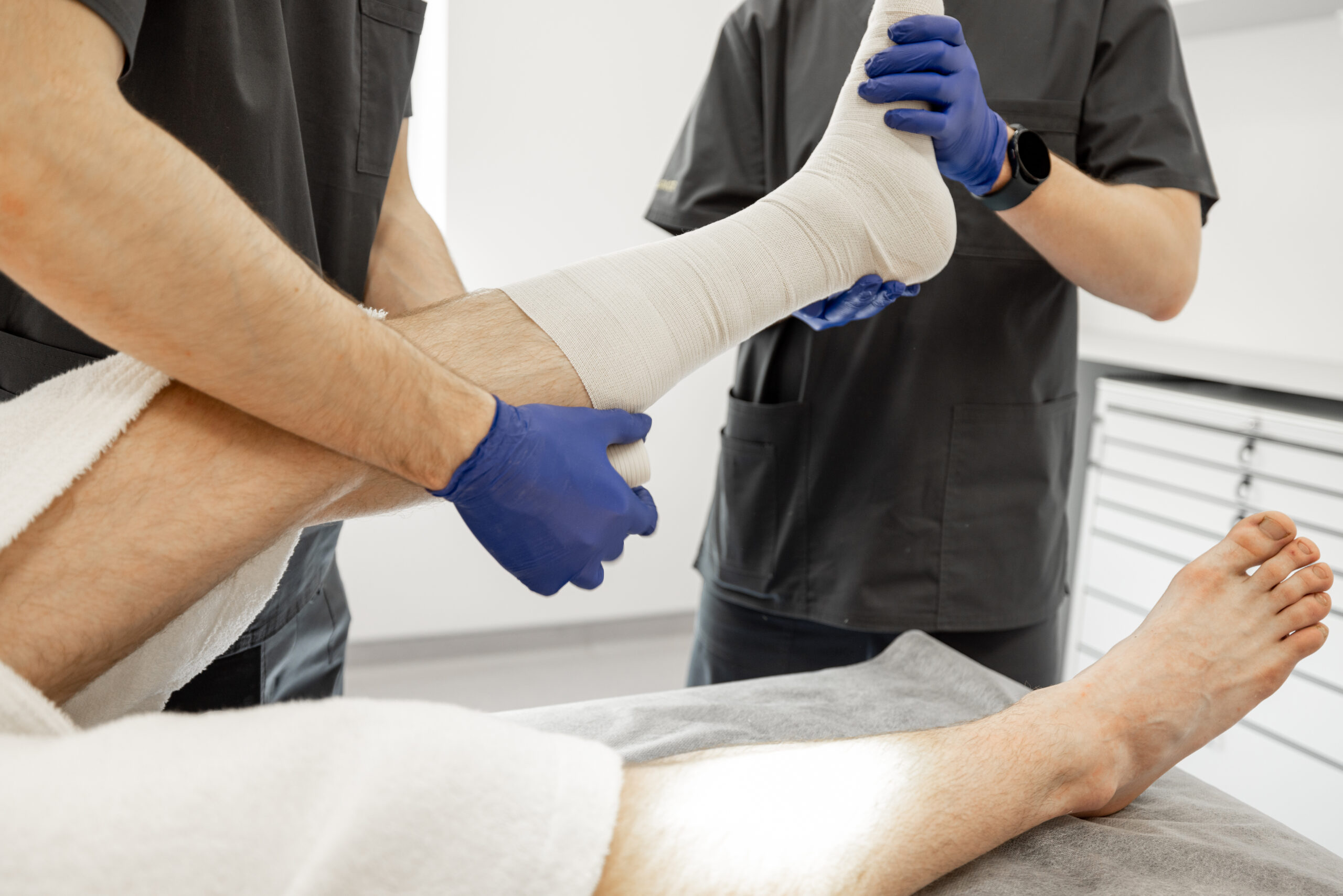
- Initial stabilisation — bracing and swelling control immediately after injury, sometimes with staged surgery depending on the injury pattern
- Ligament reconstruction surgery — torn ligaments are reconstructed, often using tendon grafts, either in a single combined surgery or in planned stages depending on complexity
- Repair of associated injuries — meniscus tears, cartilage damage, or fractures are addressed as part of the same treatment plan
- Structured, extended rehabilitation — given the complexity of multiligament reconstruction, physiotherapy plays an especially critical role in restoring stability and function
Because multiligament reconstruction is technically demanding — often requiring careful sequencing of which ligament to reconstruct first and precise graft tunnel placement — this is a procedure best handled by a surgeon with specific experience in complex knee ligament surgery, not general orthopedic cases alone. Dr. Chethan Nagaraj at Orthocare brings extensive arthroscopic experience across ACL, PCL, and combined ligament reconstruction to these complex cases.
Multiligament Injury Treatment Cost in Bangalore
Cost for multiligament injury treatment in Bangalore varies more than single-ligament procedures, given the complexity and the number of structures often involved:
|
Category |
Typical Range |
|
Number of ligaments reconstructed |
Cost increases with each additional ligament requiring reconstruction |
|
Single-stage vs. staged surgery |
Staged procedures involve separate hospital admissions and costs |
|
Associated injury repair (meniscus, cartilage, fractures) |
Adds to overall surgical cost |
|
Hospital category and room type |
General ward vs. private room affects overall package |
|
Length of hospital stay |
Typically longer than single-ligament surgery, given the complexity |
|
Extended physiotherapy program |
A significant part of the overall treatment cost, given longer rehabilitation |
|
Pre-surgical diagnostics (MRI, vascular imaging, blood work) |
Usually billed during the emergency and workup phase |
Because multiligament injuries vary enormously in severity and combination of structures involved, an accurate cost estimate can only be given after your surgeon has fully assessed your MRI and clinical findings. Most standard health insurance policies in India cover multiligament reconstruction surgery — confirming pre-authorization and coverage limits with your insurer is strongly recommended given the higher overall cost of these cases.
Multiligament Injury Recovery Timeline
Recovery from multiligament reconstruction is considerably longer and more structured than single-ligament surgery, given the number of structures healing simultaneously.
Month 1: Focus on protecting the reconstructed ligaments, managing swelling, and beginning carefully guided range-of-motion exercises. Bracing and limited weight-bearing are common during this phase.
Month 2–3: Progressive weight-bearing and gentle strengthening begin, closely supervised by physiotherapy to avoid overloading the healing grafts.
Month 4–6: Balance training, more advanced strengthening, and functional movement patterns are introduced as healing progresses.
Month 6–9: Continued strength-building and stability work, with sport-specific or activity-specific drills introduced gradually for appropriate candidates.
Month 9–12+: Return to full activity or sport, if applicable, only after thorough functional and strength testing confirms the knee can handle the demands safely.
Given the complexity of multiligament reconstruction, full recovery often takes up to a year or longer, and patience through each stage of rehabilitation genuinely protects the surgical outcome.
Why Location Matters When Choosing a Multiligament Injury Surgeon in Bangalore
Multiligament injury treatment involves an especially long rehabilitation journey — frequent physiotherapy sessions, multiple follow-up visits, and close monitoring over many months. Choosing a surgeon and clinic close to home makes this demanding recovery process considerably more manageable.
Orthocare offers multiligament injury consultation and treatment across two convenient Bangalore locations, serving patients in Rajajinagar, Jayanagar, Bannerghatta, and surrounding areas:
- Orthocare Center, Rajajinagar — 241/24, 53rd Cross, 10th Main, Rajajinagar 4th Block, Opposite Ram Mandir, Bangalore 560010
- Sagar Hospital, Jayanagar/Tilaknagar/Bannerghatta — #44/55, 30th Cross, Bannerghatta approach road, Jayanagar 4th T Block, Tilaknagar, Bangalore 560041
Patients searching for a multiligament injury specialist in Rajajinagar or knee ligament reconstruction near Jayanagar and Bannerghatta can access urgent consultation, surgery, and the extended follow-up physiotherapy this injury requires, without long commutes across Bangalore.
Why Choose Dr. Chethan Nagaraj for Multiligament Injury Treatment in Bangalore
Multiligament reconstruction demands a level of surgical planning and technical precision beyond routine knee surgery. Dr. Chethan Nagaraj offers:
- 15+ years of dedicated orthopedic and arthroscopic surgery experience
- MBBS from Mysore Medical College and a Masters in Orthopaedics from Madras Medical College, Chennai
- Clinical experience at AIIMS and the Jai Prakash Narayan Apex Trauma Center, New Delhi — a background directly relevant to managing complex trauma cases like multiligament injuries
- International fellowship training from Australia, New Zealand, and Japan
- Routine expertise in arthroscopic ACL reconstruction using transportal and all-inside techniques, extending to complex combined ligament reconstruction
- A patient-first communication style — patients consistently mention how clearly he explains complex treatment plans, staged surgery decisions, and realistic recovery expectations, which matters enormously given how demanding this recovery journey can be
If you’re researching the best multiligament injury surgeon in Bangalore, it’s worth getting an urgent consultation to review your MRI findings and discuss the safest, most effective sequence of treatment for your specific combination of ligament injuries.
Risks and Complications to Be Aware Of
Multiligament injury treatment carries higher complexity and correspondingly higher risk than single-ligament surgery, which is worth understanding upfront:
- Persistent knee stiffness — more common given the extent of surgery, requiring diligent, guided physiotherapy
- Graft failure or re-injury — particularly if rehabilitation protocols aren’t followed closely
- Nerve or vascular complications — a known risk with multiligament injuries and their treatment, closely monitored throughout care
- Residual instability — some patients may have mild residual laxity even after successful reconstruction, depending on injury severity
- Longer-term risk of arthritis — given the extent of joint trauma involved in these injuries
Choosing a surgeon experienced specifically in multiligament reconstruction, and committing fully to the extended physiotherapy program, meaningfully improves the likelihood of a stable, functional outcome.
Frequently Asked Questions
- Is multiligament knee surgery an emergency?
It can be, particularly when there’s an associated knee dislocation with risk of vascular injury. Any high-impact knee injury with numbness, colour change, or severe instability should be evaluated urgently. - How many surgeries are needed for a multiligament injury? This depends on the specific combination of ligaments involved. Some cases are treated in a single combined surgery, while others require staged procedures over separate admissions for the safest outcome.
- How long is the hospital stay for multiligament reconstruction? Hospital stay is typically longer than single-ligament surgery, often several days, depending on the complexity of the case and any associated injuries.
- How long does full recovery take after multiligament reconstruction?
Full recovery, including return to sport where applicable, often takes nine months to a year or longer, given the complexity of healing multiple ligament reconstructions simultaneously. - Does insurance cover multiligament injury treatment in Bangalore?
Most standard health insurance policies in India cover multiligament reconstruction surgery, subject to policy terms. Given the higher overall cost, confirming detailed pre-authorization with your insurer is strongly recommended. - Will my knee be completely normal after multiligament surgery?
Many patients regain excellent function and stability, though some may have mild residual differences compared to an uninjured knee, depending on the severity of the original injury. Realistic expectations should be discussed with your surgeon based on your specific case. - What’s the first step if I’ve had a severe knee injury?
Seek immediate orthopedic evaluation, especially if there’s significant swelling, instability, deformity, or any numbness in the foot. Early, accurate diagnosis is critical to planning safe and effective treatment.
Book Your Multiligament Injury Consultation in Bangalore
If you or a loved one has suffered a severe knee injury, Dr. Chethan Nagaraj at Orthocare offers expert consultation and multiligament injury treatment across the Rajajinagar and Jayanagar/Bannerghatta areas of Bangalore.
Explore related services:
- Multiligament Injury
- ACL Surgery
- Meniscus Treatment
- Knee Arthroscopy
- About Dr. Chethan Nagaraj
- Contact Us / Book an Appointment
A multiligament knee injury is serious, but with the right surgical expertise, a carefully planned treatment approach, and a committed rehabilitation journey, restoring a stable, functional knee is achievable.
This article is for informational purposes only and does not substitute professional medical advice. If you are experiencing a severe knee injury, especially with numbness or colour change in the foot, seek emergency medical care immediately. Please consult Dr. Chethan Nagaraj or a qualified orthopedic surgeon for diagnosis and treatment tailored to your condition.